
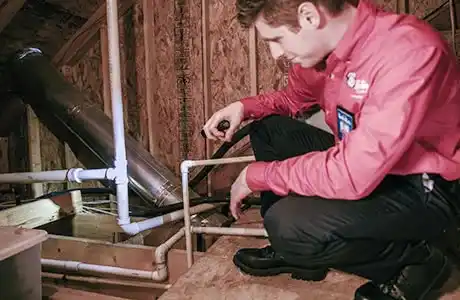
Frequent leaks, consistently low water pressure, discolored water, or pipes that are known to be made of lead or polybutylene are all strong indicators that repiping deserves serious consideration. A plumber can evaluate the age and condition of your system and give you an honest picture of what you're working with.
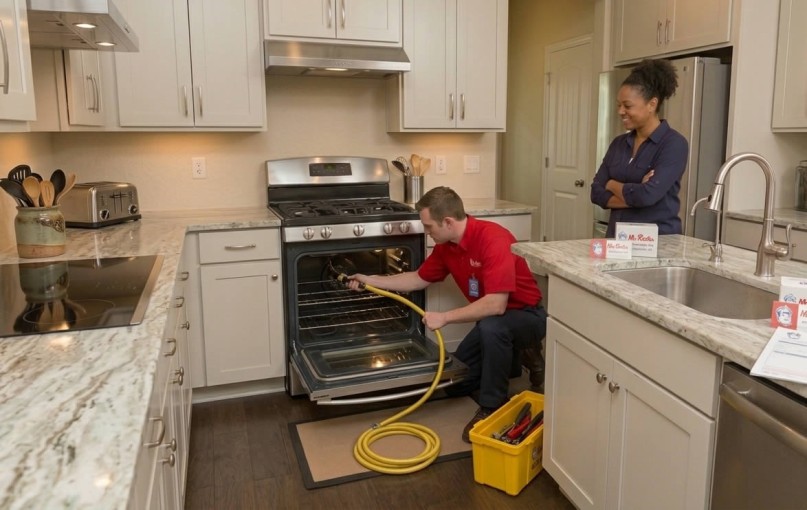
Trusted Gas Line Repair & Installation in League City, TX
Gas line problems are in a different category than most household plumbing issues, and treating them with the same wait-and-see approach you might take with a slow drain is a serious mistake. Mr. Rooter Plumbing offers gas line repair in League City, TX, with the precision and care the work demands, because even a small leak in the wrong place creates safety risks for everyone in the home. The smell of rotten eggs, hissing sounds close to an appliance, or a gas bill that's climbing without explanation are all reasons to stop what you're doing and get a professional involved. Read more to understand how gas line repair works, what the risks of delay look like, and what you should do if you suspect a problem right now.
How to Recognize the Signs of a Gas Line Leak
The sulfur smell added to natural gas is the most obvious warning, but it's not the only one. A hissing or whistling sound close to a gas appliance, connector, or buried line can indicate pressure escaping through a crack or loose fitting. Dead patches of grass above a buried gas line, without any other explanation like drought or grubs, suggest a leak is feeding into the soil and displacing oxygen at the root level.
Inside the home, watch for pilot lights that won't stay lit, burners that ignite unevenly, or appliances that run longer than usual to reach temperature. These can each point to reduced gas pressure caused by a leak somewhere in the supply line. A gas bill that spikes without any change in usage is another problem worth investigating.
If you notice any combination of these signs, leave the house, avoid switching an electrical device on or off, and call your gas utility from outside. An emergency plumber in League City can then check the line once the utility has shut off the supply and confirmed it's safe to enter. Speed matters here because gas accumulates in enclosed spaces, and the threshold for ignition is low.
See the Difference for Yourself
Read our reviews to learn more about the Mr. Rooter experience
Shaun was absolutely fantastic! Came out on time, was super professional, extremely knowledgeable, and took the time to explain what the issues were with both toilets in need of repair and what was needed to resolved them. He was able to fix one on the spot in a flash and it’s working perfectly now. He left the area clean and tidy. He’ll be back to fix the other requiring addition assistance and extensive work, but he definitely knew the issue straight away. It’s hard to find reliable service these days, but Shaun truly exceeded expectations. I would highly recommend him to anyone needing plumbing work. Thank you so much Shaun!!
Steven and Fred where a breath of fresh air. 1 they arrived on time ahead of schedule so I didn't have to wait all day for my time window. Mr Rooter was the 3rd company that came out to fix my dishwasher. Steven assessed the issue and it was an extremely simple fix. He made my plumbing work better vs redoing what someone did before and doing patch work. Both gentlemen where polite and patient. I will be requesting them only from here on out
Shaun definitely over delivered in his service. He came in and replaced the worn faucet on ourr kitchen sink. As he did his work, he gave us many tips on ways to preserve the life of our plumbing hardware. And with his warm personality, we discovered that he's a dude that's serious about his Philly cheese steaks. So now we trust him with our plumbing needs AND his referrals to places that serve the best Philly cheesesteaks in the Houston area.
Steven and Fred were both very thorough and efficient. I was impressed with their overall knowledge and ability to diagnose the issue quickly and solve the problem. I was thankful for their quick attention because we are going out of town soon and this gives us piece of mind. They also recommended ways to help prevent this from happening in the future which I appreciated. Recommend them again for sure.
Sean did an excellent job from start to finish. He was very professional, communicated clearly, worked quickly, and provided a lot of helpful advice throughout the process. His quality of work was great and he made sure everything was done right. Definitely appreciate his service and highly recommend him!
Why Gas Line Repair Is Never a DIY Project
Gas line repair is regulated work in every U.S. state. Most areas require a licensed plumber or gas fitter to pull a permit, complete the repair, and pass an inspection before the line is re-pressurized. Skipping this process risks a fine, and it can void your homeowner's insurance coverage if a leak or fire is later traced to unpermitted work.
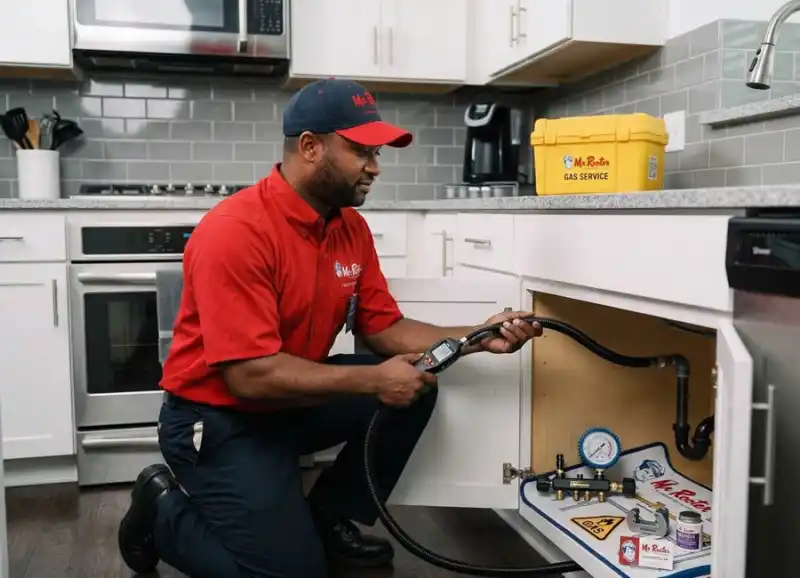
The technical barriers are substantial on their own. Properly joining steel, corrugated stainless steel tubing, or copper gas lines requires specific fittings, thread sealants rated for gas service, and pressure testing with calibrated gauges. Professionals use pressure decay tests and gas-specific leak detection fluid to confirm safety before the system goes back online.
Gas line installation and the repairs that follow it also require accurate knowledge of load calculations. Every appliance on a line draws a measured volume of gas, and the pipe diameter has to support that combined demand. An undersized repair that restricts flow can cause appliances to run inefficiently or fail. An experienced plumber sizes the repair to the system.
Our Services
Sewer Repair
Reliable Sewer Repair & Replacement in League City, TX A damaged sewer line can turn into one of the most disruptive and expensive plumbing problems a homeowner faces. Mr. Rooter Plumbing has worked through enough sewer repair jobs to know that the earlier you catch a problem, the better your options are. From tree root intrusion to collapsed pipes, sewer line damage comes in a lot of forms, and not…
Read More
Plumbing Repair
Local Plumbers in South Houston, TX Plumbing problems rarely stay the same size. Leaks, pressure problems, failing fixtures, corroded fittings, and drain issues all fall under the same roof, and each one has its own timeline for getting worse. Mr. Rooter Plumbing provides reliable plumbing repairs. If something in your home's plumbing has been nagging at you, keep reading to get a better understanding of what you're dealing with and…
Read More
Leak Detection
Water Leak Detection & Repair in League City, TX Water has a talent for finding the smallest opening and making itself at home inside your walls, floors, and foundation long before you notice it. Some leaks are obvious, but a surprising number of them go undetected for months. Mr. Rooter Plumbing uses professional leak detection equipment to find exactly where water is escaping without tearing your home apart to do…
Read More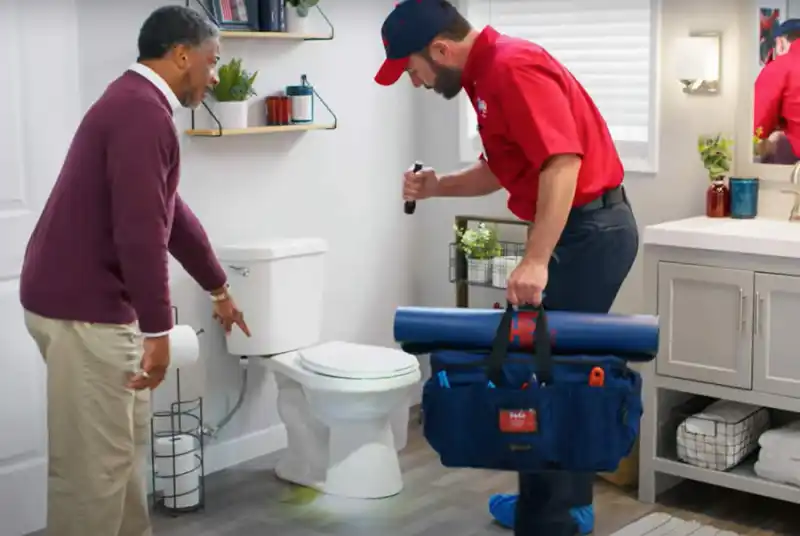
Water Heater Repair
Water Heater Repair & Replacement Service Few things will derail a morning faster than stepping into a cold shower without warning. Mr. Rooter Plumbing gets calls about water heater repair a lot, and in many cases, the signs are there well before the unit finally gives out. Strange noises, inconsistent temperatures, discolored water, and rising energy bills are all signals to pay close attention to. Understanding the symptoms of trouble…
Read More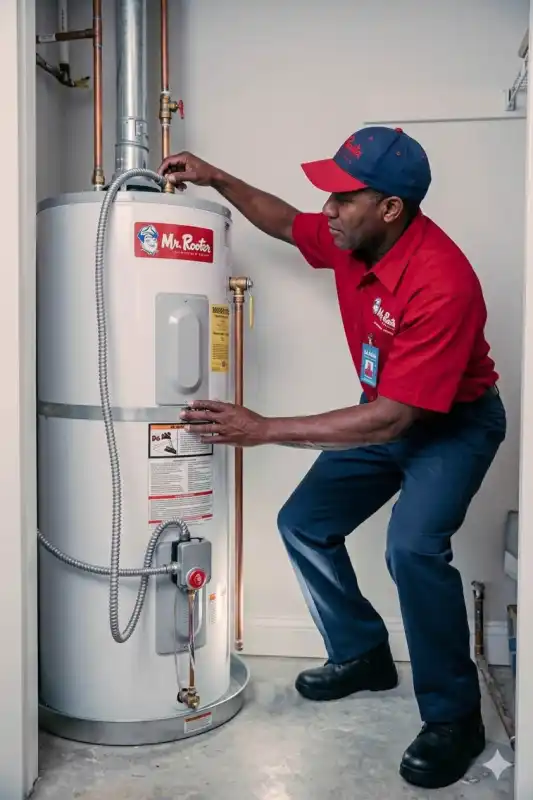
Bathroom Plumbing
Bathroom Plumbing Services Your bathroom sees more use than almost any other room in the house, and the plumbing behind it takes the brunt of the wear. From slow drains to running toilets to mysterious drips under the vanity, bathroom plumbing problems can stack up quietly before they become impossible to ignore. Mr. Rooter Plumbing has handled everything from simple fixture repairs to full bathroom remodels, and we've seen firsthand…
Read More
Kitchen Plumbing
Kitchen Plumbing Services Grease, food scraps, and soap residue do a number on kitchen pipes, and most homeowners don't realize how much strain their kitchen plumbing is under until something backs up or starts leaking. The team at Mr. Rooter Plumbing has seen everything from stubborn clogs to supply line failures behind the refrigerator. We know how quickly a small issue can interrupt the rhythm of a household. Kitchen plumbing…
Read More
Pipe Repair & Repiping
Repiping & Pipe Repair in League City, TX Most homeowners have no idea what their pipes are made of, how old they are, or what condition they're in until a leak forces the conversation. Mr. Rooter Plumbing works on pipe repair and repiping jobs across a wide range of homes, from newer construction with isolated damage to older houses running on plumbing that's decades past its intended lifespan. Knowing whether…
Read More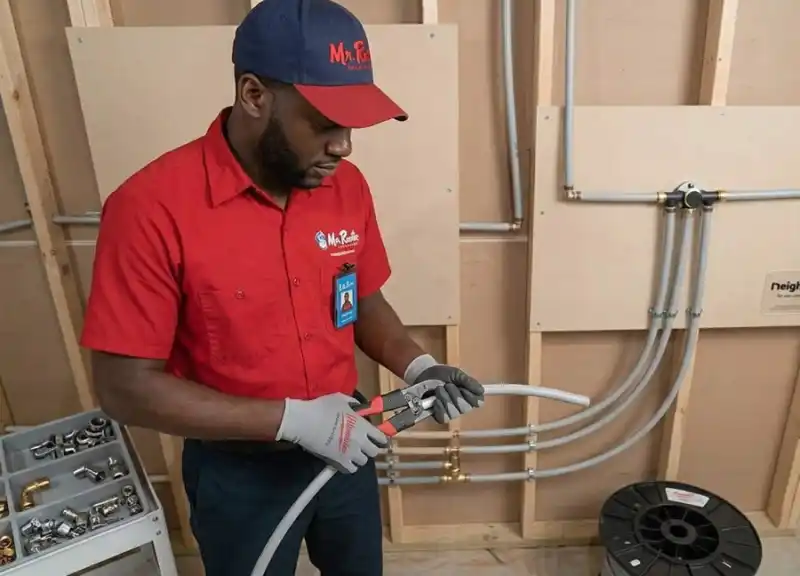
Shower Repair
Reliable Shower Repair in League City, TX A dripping showerhead wastes water, fluctuating temperatures point to valve trouble, and a slow drain can signal something deeper in the line. Mr. Rooter Plumbing works on shower repair jobs ranging from simple fixture fixes to more involved valve and pan work. The scope of the job usually depends on how long the problem was left to develop. Getting ahead of shower issues…
Read More
How Professionals Locate and Diagnose a Gas Line Problem
Locating a gas leak isn't as simple as following the smell. Gas disperses, travels along pipe chases, and can surface far away from the actual breach point. Professionals use combustible gas detectors to measure gas concentration at certain points along the line, which narrows the source to a specific section.
Once the general area is identified, a pressure test isolates the problem even further. A plumber caps the line, charges it to a set pressure, and monitors for pressure drop. If the pressure falls, then there's a leak. The test also tells the technician how significant the leak is, which informs whether a targeted gas line repair is sufficient or whether gas line replacement of a full section is warranted.
For buried lines, electronic line locators trace the pipe's path before anyone digs. This protects other utilities and avoids widening the excavation beyond what's necessary. After the repair, the plumber pressure tests again before restoring gas flow, and the work is documented for the permit inspection that follows.
Dealing with Corroded, Outdated, and Undersized Gas Lines
Older homes frequently have gas lines made from black iron pipe, which corrodes from the inside out when moisture enters the system. The corrosion produces scale that flakes into fittings, partially blocks flow, and eventually eats through the pipe wall. Once a leak appears, the surrounding pipe sections are usually compromised as well. Spot repair on a heavily corroded iron pipe can lead to a second repair call within months.
CSST became the dominant material for residential gas line installation in the 1990s, and it offers flexibility advantages over rigid iron in seismic zones and during renovations. However, early CSST installations lacked bonding requirements that are now standard. Unbonded CSST is vulnerable to lightning-induced arc damage, which can burn a pinhole through the flexible jacket. A plumber inspecting an older CSST system will check bonding continuity as part of the assessment and flag sections that need to be brought up to current code.
Undersized lines are a common finding in homes where gas appliances have been added without upgrading the supply infrastructure. A gas line replacement in League City might involve upsizing the main supply from the meter and reconfiguring branch lines to appliances like a whole-home generator, a gas range, or an outdoor kitchen. A qualified gas line installer in League City will calculate demand for every connected appliance, select the correct pipe diameter, and design the layout to maintain adequate pressure throughout the system. Demand calculations and proper sizing are what separate a functional gas system from one that causes appliance problems for years.
Are You Looking for a Local Plumber or Gas Line Installer in League City, TX?
If you've noticed any warning signs or if your home has older iron pipe or unbonded CSST, don't wait for a confirmed leak to call. Mr. Rooter Plumbing provides gas line repair in League City for both urgent situations and planned upgrades. Whether you need a repair on a single fitting or a full gas line replacement in League City, our work is permitted, pressure tested, and built to last. Call today to schedule an appointment.
Mr. Rooter Coupons & Specials
Need a reliable plumber? Take advantage of these special offers on expert plumbing repair and get high-quality service at a better value today.
$50Off
Any Plumbing Service
Get $50 Off today on any plumbing repairs of $400 or more. Not valid with any other offers. Limit one coupon per customer.
Print Now
$100Off
Tankless Water Heaters
Get $100 off tankless water heater installation. Not valid with any other offers. Limit one coupon per customer.
Print Now
$35Off
Toilet Replacement
Get $35 off toilet replacement today. Not valid with any other offers. Limit one coupon per customer.
Print Now
$150Off
Whole House Repiping
Get $150 off your whole house pipe replacement. Not valid with any other offers. Limit one coupon per customer.
Print NowFrequently Asked Questions
Does homeowner's insurance cover plumbing repairs?
Most homeowner's insurance will cover sudden and accidental water damage, like a pipe that unexpectedly bursts, but it usually doesn't cover damage from neglected maintenance or gradual leaks. Reading your policy carefully and asking your agent about water backup coverage is worth the time before something goes wrong.
What's the best way to find a water shutoff valve?
Your main shutoff valve is usually located near the water meter, which is normally found in the basement, crawl space, garage, or along an exterior wall on the side of the house facing the street. Knowing exactly where it is before an emergency saves valuable time.
Why is my water heater making a popping or rumbling noise?
Those sounds come from sediment that's settled at the bottom of the tank and is being disturbed as the water heats up around it. Flushing the tank annually helps prevent buildup, but if the noise is loud or the unit is older, it may be worth having a plumber assess whether repair or replacement makes more sense.
How often should I schedule plumbing maintenance?
Having a plumber inspect your system once a year is a good general rule, especially if your home is older or you've had recurring issues. Routine maintenance catches small problems before they become expensive repairs and gives you peace of mind about the overall health of your system.
What does a plumbing camera inspection involve?
A small waterproof camera is fed through your drain or sewer line to give the plumber a live view of what's happening inside the pipe. It's one of the most accurate ways to diagnose a recurring clog, locate a crack, or check the overall condition of older pipes.
Can tree roots really damage my sewer line?
Yes, tree roots actively seek out moisture and can infiltrate even small cracks in sewer pipes, growing into the line and eventually causing significant blockages or structural damage. Older clay or cast iron pipes are especially vulnerable, and regular camera inspections can catch root intrusion early.
What is hydro jetting, and when is it used?
Hydro jetting uses a high-pressure stream of water to blast out buildup, grease, and debris from the inside of your pipes. It's especially useful for commercial properties or homes with heavily scaled or repeatedly clogging drain lines that a standard snake can't fully clear.
How do I know if I have a hidden water leak?
Watch out for a sudden spike in your utility bill, soft or discolored spots on walls or ceilings, the sound of running water when nothing is in use, or damp areas around the foundation. An experienced plumber can use leak detection equipment to locate the problem without unnecessary damage to your home.
What causes sewer odors in the house?
Sewer smells inside a home often point to a dried-out P-trap, a cracked or damaged wax ring under a toilet, or a venting issue in the drain system. Running water in rarely used fixtures usually solves a dry P-trap, but persistent odors should be inspected by a plumber to rule out a more serious issue.